
In the latest episode of the Mindful Learning Podcast, I spoke with English teacher and researcher Sabina Miah about GCSE English, oracy, workload, creativity, and what is happening inside English classrooms today.
Sabina trained on the PGCE English programme at Goldsmiths and is now researching the impact of GCSE English Language reforms on teachers’ pedagogy and classroom practice. Our conversation explored not only the structure of the qualification itself, but also the wider social and emotional consequences of an increasingly exam-driven education system.
You can listen to the full podcast alongside this article.
What emerged from the discussion was a picture of a system that often leaves both teachers and students exhausted, constrained, and disconnected from the deeper possibilities of English as a subject. Sabina described entering teaching and feeling that “everything I had to do was calculated”, eventually developing what she called a “teacher autopilot”, though she admitted this often came “at the expense of my health”. At the same time, she spoke movingly about the joy of “those little interactions with the students and getting to know them”, which still made the work feel worthwhile.
At its best, English should help young people explore identity, language, empathy, creativity, disagreement, rhetoric, culture, and human experience. It should help students learn how to speak, write, think, listen, debate, imagine, and reflect.
Too often, however, English teaching has become narrowed into exam technique, formulaic writing structures, and what Sabina memorably described as “technique spotting”.
Here are five important things parents, teachers, policymakers, and students should know about GCSE English and oracy.
1. Spoken language no longer meaningfully counts towards GCSE English
One of the most significant changes to GCSE English over the past decade has been the removal of weighted speaking and listening assessments.
When I first began teaching, students completed a range of spoken language tasks, including debates, role plays, presentations, dramatic performances, and collaborative discussions. These contributed to their final GCSE English Language grade.
Today, most students complete a single spoken language presentation which is formally recorded but does not substantially contribute to their overall mark.
As Sabina explained in the podcast, teachers are often placed in the difficult position of having to persuade students that spoken language matters educationally, while simultaneously knowing that the system itself does not significantly reward it. She pointed out that teachers tell students speaking matters “for the future, like public speaking skills”, while also knowing “in reality, it is unweighted now”.
This matters because oracy is not an optional extra. The ability to speak confidently, articulate ideas, listen carefully, challenge others respectfully, and express disagreement constructively is fundamental to democratic participation and social mobility.
Research increasingly suggests that spoken language development strongly supports writing development, reading comprehension, confidence, and critical thinking.
Yet in many schools, especially those under intense accountability pressures, opportunities for exploratory discussion have been reduced.
2. GCSE English has become increasingly dominated by exam technique
Sabina described many English lessons as highly structured, tightly timed, and dominated by retrieval exercises, comprehension tasks, and extended writing under pressure.
There are good reasons for some structure. Many students benefit from scaffolding and clear routines.
However, there is a danger that formulaic approaches to English begin to replace genuine interpretation, discussion, and exploration.
Students are often taught acronyms, rigid paragraph structures, and highly performative exam responses. Sabina observed that “there’s a lot of formulas that are used in English language”, and while these structures may help some students initially, they can also “move away from the meaning of the English subject in terms of being exploratory in your response”. In some classrooms, literature becomes less about meaning and more about spotting techniques quickly enough to secure marks.
This creates several problems.
Firstly, students can become alienated from literature itself. Secondly, the subject can lose its emotional and imaginative dimensions. Thirdly, many teachers feel their professional creativity has been diminished.
As Sabina noted, some pupils become deeply disengaged because they experience English less as a subject about human experience and more as a technical decoding exercise. Teaching GCSE resit classes, she found many students “completely disillusioned” by what English had become.
3. Creative and dialogic teaching is becoming harder to sustain
One of the most striking parts of our conversation concerned the shrinking space for drama, discussion, debate, and collaborative learning.
Sabina spoke movingly about wanting students to act out scenes, debate moral questions, discuss character motivations, and connect literature to contemporary life. She said she wanted classrooms where students could ask questions such as “Is this character redeemable?” and where literature connected meaningfully with “real life and current affairs”. Yet she also described schools where moving tables for dramatic activities was discouraged.
This narrowing is particularly concerning because spoken interaction is often how students develop confidence, empathy, and interpretative depth.
In my own research I have argued that dialogic and reciprocal approaches to teaching help students produce more authentic and thoughtful responses to literature. Students frequently need time to think aloud before they can write effectively.
Ironically, some of the schools with the richest discussion cultures are often those serving more advantaged communities, while some schools serving disadvantaged students have become increasingly silent and compliance-driven.
This creates a troubling inequality.
Students from all backgrounds deserve classrooms where they can speak, think, question, challenge, and collaborate.
4. Teacher workload and emotional pressure are extremely high
Sabina spoke honestly about the emotional and physical toll of teaching. She described schools where staff were expected to manage endless responsibilities simultaneously, saying there was an assumption teachers would “take work home all the time” because completing everything within the school day was “not possible”.
Like many early career teachers, she described feeling that every action during the school day had to be carefully calculated. Alongside teaching, staff are expected to manage tutor responsibilities, parental communication, marking, administration, behaviour systems, interventions, and data demands.
Many teachers stay late into the evening simply to keep up.
This workload culture affects not only teacher wellbeing, but also pedagogy itself. Exhausted teachers often have less time and energy for experimentation, creativity, and relationship-building.
The irony is that education systems frequently talk about resilience while structurally generating exhaustion.
Mindful teaching does not mean abandoning standards or rigour. It means recognising that learning is relational, emotional, social, and human.
Teachers and students both need space to reflect, think, converse, and make meaning.
5. There is still hope for a more humane and creative English education
Despite the pressures, our conversation was ultimately hopeful. Sabina reflected that young people today are “a lot more vocal” and socially aware, and argued that schools should find healthier ways to “platform them” and develop those capacities rather than suppress them.
Sabina spoke about young people today being highly vocal, thoughtful, and socially aware. She argued that schools should be harnessing these capacities rather than suppressing them.
We discussed the possibility of reintroducing richer forms of oracy into education, including debates, drama, presentations, collaborative enquiry, and multimodal forms of expression.
English could once again become a subject where students make films, create podcasts, perform scenes, discuss ethical dilemmas, analyse media critically, and connect literature to their own lives.
None of this means abandoning rigour.
In fact, genuine rigour often emerges through complexity, discussion, revision, reflection, and sustained thought, not simply through silence and repetition.
If policymakers genuinely want young people to become articulate, thoughtful, informed citizens, then spoken language and creativity must once again become central to the curriculum.
As Sabina powerfully argued near the end of the podcast, policymakers need to spend more time in real classrooms listening to teachers and students.
Education reform is never merely administrative.
It shapes relationships, identities, aspirations, confidence, and what kinds of voices society values.
Edited Podcast Transcript
Francis Gilbert
Welcome to the Mindful Learning Podcast. I’m Dr Francis Gilbert, Head of Education at Goldsmiths and author of The Mindful English Teacher.
Today I’m joined by Sabina Miah, an English teacher and researcher exploring the impact of GCSE English Language reforms on teachers’ pedagogy and classroom practice.
Over the past decade, GCSE English has undergone major changes. Coursework has disappeared, terminal examinations dominate assessment, and spoken language has effectively become unweighted.
Critics argue these reforms have narrowed the curriculum and shifted English teaching away from creativity, exploratory discussion, and authentic communication towards performative exam preparation.
Sabina, welcome.
Sabina Miah
Thank you so much for having me.
Francis Gilbert
English teachers often have deeply personal reasons for entering the profession. Tell us a little about your journey.
Sabina Miah
I wanted to become an English teacher because I understood the importance of being able to express yourself verbally and in writing. I was a very shy child, and once I learned how to express myself confidently, I wanted to help young people develop those same skills.
I also had an A-level teacher who was incredibly kind and made us feel heard. She had a massive impact on me.
Francis Gilbert
You trained at Goldsmiths. What stands out when you look back?
Sabina Miah
The PGCE was challenging, especially writing at master’s level, but it really made me think about why I wanted to teach. It helped me connect my own experiences as a young person with wider questions about literacy, critical thinking, and education.
Francis Gilbert
What were some of the biggest shocks once you entered teaching full time?
Sabina Miah
The expectations on staff were intense. You are teaching, tutoring, contacting parents, managing behaviour, and trying to do everything within the school day, which is impossible.
Over time, you develop a kind of teacher autopilot, but it can come at the expense of your health.
Francis Gilbert
Your research focuses on GCSE English reforms. What drew you towards that?
Sabina Miah
I started noticing that many of the students being left behind came from disadvantaged backgrounds. Later, when I taught GCSE resit classes and Functional Skills English, I saw how robotic the qualification had become.
Lessons often focused heavily on technique spotting and formulaic responses. Many students were deeply disengaged.
Francis Gilbert
Could you explain some of the major changes?
Sabina Miah
Coursework was removed. Literature became closed book, so students have to memorise quotations. Most importantly for me, spoken language became unweighted.
Students now complete a speech, but it does not meaningfully contribute to their final grade.
Francis Gilbert
When I first taught English, coursework and spoken language made up a substantial part of the qualification. Students could debate, perform, present, and develop work over time.
That process of editing and reflection has largely disappeared.
Sabina Miah
Yes, and I think that process matters. Students need opportunities to improve their work gradually and develop ideas through discussion.
Francis Gilbert
What does a typical English lesson look like now?
Sabina Miah
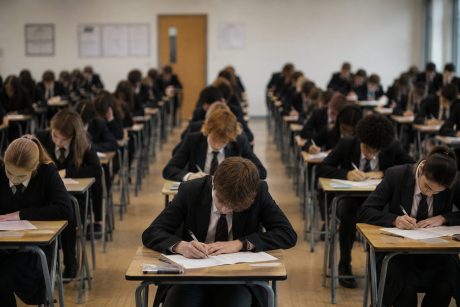
Usually students come in silently and complete a retrieval task. Then we review answers, read an extract or text, complete comprehension questions, and move towards an extended writing task.
There are some opportunities for pair discussion, but time is always very tight.
Francis Gilbert
Are you enjoying teaching English at the moment?
Sabina Miah
Honestly, no. The workload has become unmanageable, even working part time.
That’s partly why I’m interested in moving into education policy. I want to understand how these systems developed and whether education can become more manageable for both staff and students.
Francis Gilbert
Why does oracy matter educationally?
Sabina Miah
Being able to express yourself, hold conversations, debate ideas, and communicate with people who disagree with you is incredibly important.
With technology becoming so dominant, we need strong spoken language skills more than ever.
Francis Gilbert
What happens when spoken language no longer counts?
Sabina Miah
There becomes less space for emotional literacy, empathy, and exploratory thinking.
English can become reduced to identifying techniques and producing formulaic responses.
Francis Gilbert
I also worry about inequality. In some more advantaged schools there is still lots of discussion and debate, while in some schools serving disadvantaged communities students are expected to sit silently for long periods.
Sabina Miah
Yes, I have worked in schools where students received sanctions for very minor things, including posture or equipment.
Sometimes it feels less like education and more like policing.
Francis Gilbert
What would an ideal English classroom look like to you?
Sabina Miah
I would love classrooms where students can act out scenes, debate ideas, discuss literature deeply, and connect texts to contemporary life.
There should be more opportunities for creativity, discussion, and media literacy.
Francis Gilbert
What gives you hope?
Sabina Miah
Young people are thoughtful and vocal. There is huge potential there.
I also think there is growing recognition that oracy matters across the curriculum.
Francis Gilbert
Finally, what does mindful learning mean to you?
Sabina Miah
For me, mindful learning means being reflective, open, honest, and willing to trust the process, even when things are difficult.
Francis Gilbert
Sabina, thank you so much for such a thoughtful conversation.
Your work reminds us that educational reform shapes not only assessment systems, but also classroom culture, relationships, creativity, and human flourishing.
Thank you everyone for listening to the Mindful Learning Podcast.
References
Gilbert, F. (2025) The Mindful English Teacher. London: Routledge.
McCaw, C. T. (2019) ‘Mindfulness, education and the problem of thinness’, Oxford Review of Education, 45(2), pp. 258–273.
Podcast materials and transcript adapted from the original recording with Sabina Miah.